Historical Peaks and the Case for Mean Reversion
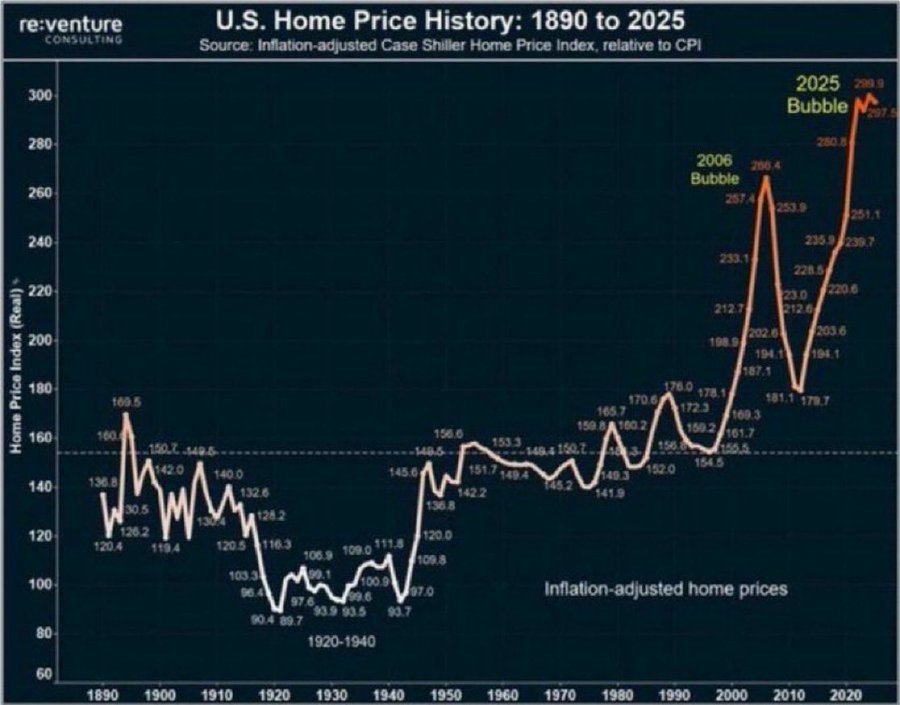
The visual evidence from the inflation-adjusted Case-Shiller Index is hard to ignore: we have moved significantly past the peak of the 2006 housing bubble. Historically, the real estate market tends to operate on a mean reversion principle. When prices accelerate this far beyond the long-term trendline, the market eventually seeks a “reset” to align with historical norms. Just as the vertical move in the mid-2000s preceded a major multi-year correction, the current trajectory suggests we are reaching an affordability ceiling that could trigger a similar downward adjustment.
Is a 2008 Style Correction Possible?
While the lending standards today are significantly more robust than they were during the subprime crisis, the underlying risk today is a fundamental disconnect between prices and income. In 2008, the crash was driven by bad debt; today, the catalyst for a pullback is likely to be a “buyer’s strike” caused by record-low affordability. If inventory begins to rise while high interest rates keep buyers on the sidelines, the market will be forced into a “price discovery” phase. We may not see the same systemic collapse as 2008, but a significant reversion toward the historical average—the horizontal line on the chart—remains a strong mathematical probability as the market seeks to restore balance.